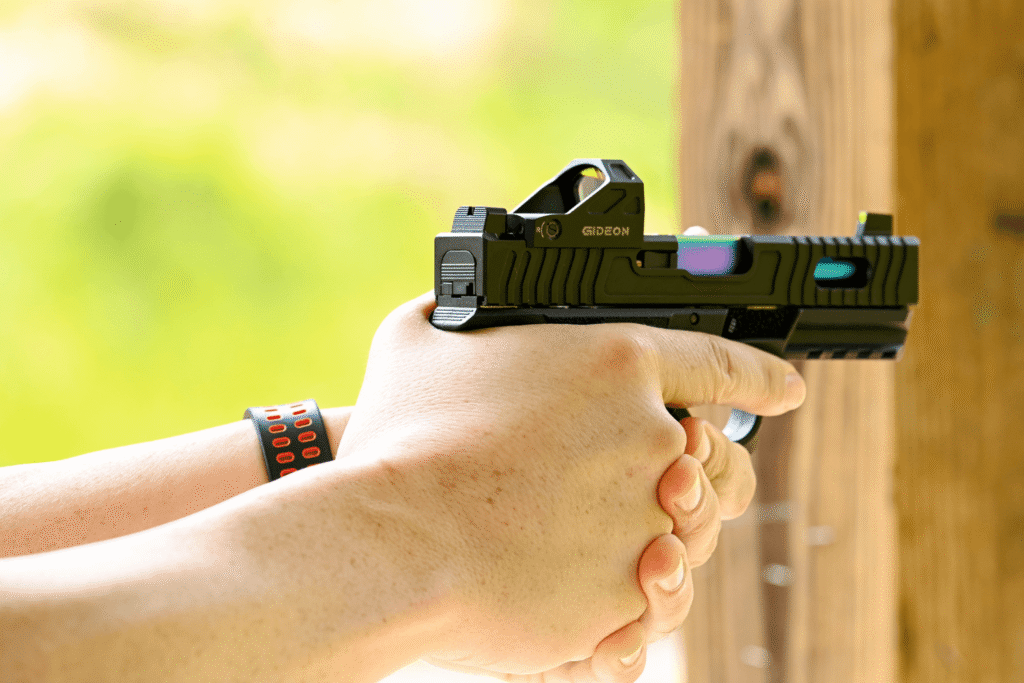
Choosing a firearm is about more than brand, caliber, price, or appearance. The right option should fit your hands, body, intended use, and comfort level. A firearm that feels manageable and natural to operate can help you build safer habits and greater confidence over time.
That is one reason gun shows can be valuable for shoppers. You can compare different makes and models in person, ask questions, and get a better sense of how a firearm feels before making a decision. The key is knowing what to evaluate.
Before you pick up any firearm at a gun show, range, or retail counter, follow the same safety rules you would anywhere else. Ask permission before handling it, keep the muzzle pointed in a safe direction, keep your finger outside the trigger guard, and confirm that the firearm is unloaded.
A responsible seller should be comfortable helping you inspect a firearm safely. If you are new to firearms, say so. A knowledgeable vendor can walk you through the controls, explain the features, and help you compare options without rushing you.
“Small hands” and “large hands” are useful starting points, but they do not tell the whole story. Two people with similar hand sizes may prefer very different firearms based on finger length, grip strength, arm length, experience, physical comfort, and intended use.
Instead of asking whether a firearm is “made for” a certain type of person, consider whether you can hold, operate, and control it comfortably and consistently.
| Fit factor | What to look for | Why it matters |
| Grip shape and circumference | Your hand should wrap around the grip securely without painful pressure, excessive gaps, or uncomfortable finger overlap | A stable, repeatable grip supports control and comfort |
| Trigger reach | With a safe, proper grip, your trigger finger should reach the trigger naturally without shifting your hand or stretching | A comfortable reach helps you press the trigger straight to the rear rather than pulling the firearm off line |
| Controls | You should be able to understand and reasonably operate the safety, magazine release, slide stop, bolt, or other controls | Controls that are awkward or inaccessible can make operation slower and less comfortable |
| Weight and balance | The firearm should not feel excessively front-heavy, difficult to support, or exhausting to hold safely | Weight affects handling, stability, comfort, and the shooter’s ability to manage the firearm |
| Stock length and contact points | With rifles and shotguns, the stock should shoulder naturally without forcing you to crane your neck or overextend your arms | A comfortable setup helps support consistent, safe handling and sight alignment |
Firearm fit comes down to how the components work with your body—not whether the firearm looks small, large, light, or heavy on a display table.
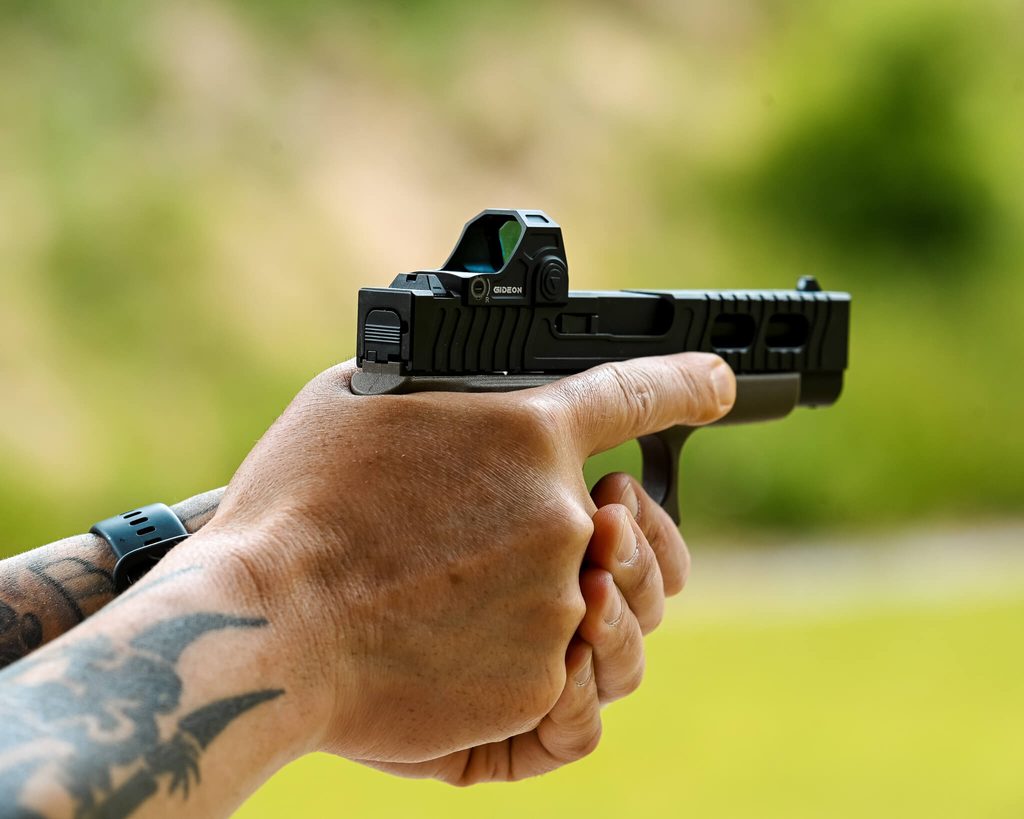
For handguns, the grip is often the first thing you notice, and for good reason. A grip should allow you to establish a secure hold with the web of your hand seated high and naturally against the backstrap.
With the firearm verified unloaded and pointed in a safe direction, see whether your fingers wrap around the grip without excessive tension. Your support hand should also have room to make meaningful contact. A grip that feels too large may force you to stretch or rotate your hand. A grip that feels too small may leave you feeling cramped or unable to establish a stable hold.
The goal is not to find a grip that merely feels “comfortable” for a few seconds. Look for one you can grip consistently, without having to reposition your hand every time you pick it up. Proper fit enables a shooter to place the hand high on the backstrap and maintain secure contact while directing trigger pressure straight to the rear.
Do not assume that the smallest firearm is automatically the easiest to hold or operate. Compact options may be easier to carry, but a very small grip can also offer less surface area and may feel less stable for some shooters. Try several sizes before drawing conclusions.
Trigger reach is the distance from the backstrap, where the web of your hand rests, to the face of the trigger. It can be one of the most important measurements when evaluating a handgun.
With a safe, established grip, your trigger finger should reach the trigger without requiring you to shift or roll your hand around the grip. The pad of the finger should make natural contact with the trigger face. You should not have to strain, overextend the finger, or use only the fingertip to reach it.
A trigger that is too far away can cause the shooter to adjust their grip, add side pressure, or pull the firearm off line when pressing it. Conversely, if the trigger is too close, the finger may extend too far through the trigger guard. Both situations can make consistent control more difficult.
At a show, you are not test-firing a firearm. However, you can still safely evaluate trigger reach by asking a vendor to clear the firearm and guide you through handling it. Never place your finger on the trigger unless the vendor instructs you to do so in a safe, controlled demonstration.
A firearm may feel good in your hand but still be difficult for you to operate. Take time to understand the location and function of the controls.
Depending on the platform, that could include the:
You do not necessarily need to operate every control without changing your grip. Some firearms are designed around two-handed operation, and some controls are intentionally stiff or protected against accidental activation. What matters is that you understand how the firearm works and can operate it deliberately, safely, and without discomfort.
If a control requires more force than you can comfortably apply, or if it causes pain, awkward wrist movement, or loss of control, ask whether the manufacturer offers different grip panels, backstraps, stock lengths, or configurations. Many models offer adjustable features that can make a meaningful difference in fit.
A firearm may feel manageable when you pick it up for a moment but become tiring when held in a shooting position. Think about how you intend to use it.
For example, a heavier firearm may feel steadier for some range use, while a lighter option may be easier to carry for longer periods. Neither is universally better. The right choice depends on your experience, strength, intended activity, and ability to operate it safely.
Hold the firearm in a safe direction, as permitted by the vendor, and pay attention to whether the balance feels natural. Does the front end feel heavy? Does your wrist feel strained? Can you maintain a stable hold without shaking or excessive effort? Does the firearm feel manageable with both hands in place?
For rifles and shotguns, balance includes how the firearm sits at the shoulder. If the stock is too long, you may have to stretch to reach the trigger. If it is too short, you may feel cramped. Length of pull (the distance from the trigger to the rear of the stock) is a central rifle and shotgun fit measurement because it affects trigger reach, shoulder position, and comfort.
The firearm that fits best for one purpose may not be the best choice for another. Start your search by thinking about what you want to do.
| Intended use | Questions to consider |
| First firearm | Is it straightforward to learn safely? Can you access quality local training and practice with it regularly? |
| Range practice | Is it comfortable enough to shoot over a full practice session? Does it support your skill-building goals? |
| Hunting | Is it appropriate for the game, terrain, weather, and applicable hunting regulations? Can you carry and operate it safely in field conditions? |
| Home protection | Can you securely store it, access it responsibly, and commit to ongoing training and maintenance? |
| Collecting | Are you evaluating historical importance, originality, condition, documentation, and long-term care needs? |
A vendor can help explain the intended purpose of a particular platform or configuration, but your decision should reflect your personal needs, not pressure to buy a specific model.
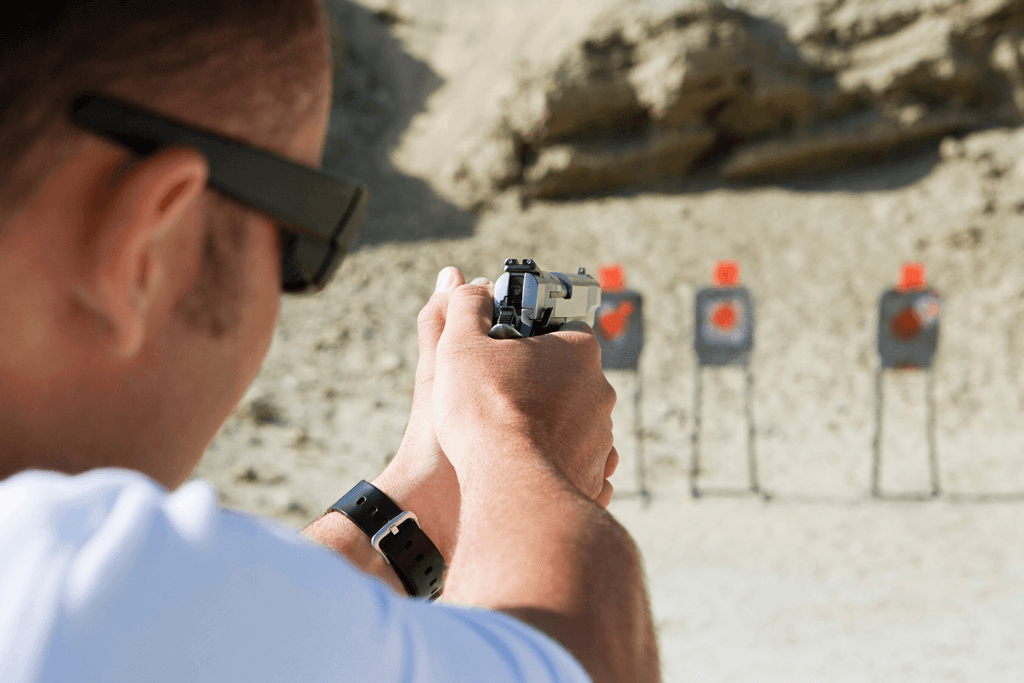
Handling a firearm at a gun show or counter is useful, but it is not the same as shooting it under professional supervision. Whenever possible, follow up with a visit to a reputable range that offers rentals, an introductory lesson, or one-on-one instruction.
A qualified instructor can help you assess basics such as stance, grip, sight alignment, safe loading and unloading, recoil management, and control operation. This is especially valuable for a first-time buyer, someone returning to shooting after a long break, or anyone considering a new platform.
Try not to make a rushed decision based solely on what felt best for a few minutes. Take notes on the models you handled. Compare their features and prices. Ask about accessories, safe storage, and maintenance. Then give yourself time to make an informed choice.
The best firearm for you is not necessarily the smallest, lightest, most popular, or most expensive option. It is the one that you can handle safely, operate confidently, and practice with consistently.
Focus on grip, trigger reach, controls, weight, balance, and intended use. Ask questions. Compare more than one option. Seek out training. And never be afraid to walk away and do more research before you buy.
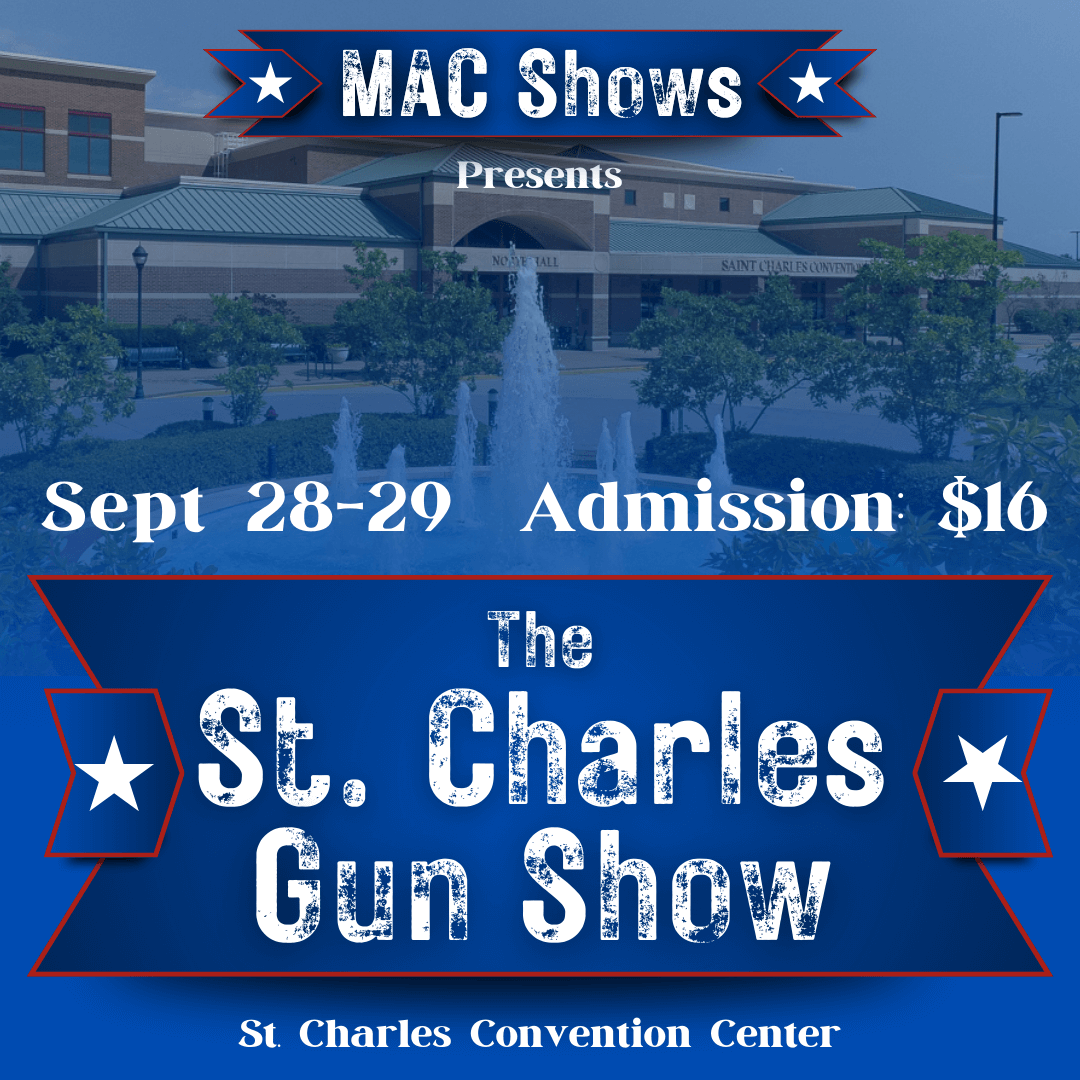
At MAC Shows events, you can explore a wide variety of firearms and related gear, speak directly with vendors, and compare options in person. Take your time on the show floor; the right fit is worth finding.